Digging Into the June 2026 Pixel Feature Drop
If you are like me and live in the Android ecosystem, today is basically a national holiday. The June Pixel Feature Drop is officially here, and this time, it is hitting alongside the massive release of Android 17 and Wear OS 7, but it certainly feels more like an Android feature drop than the traditional exclusivity of Pixel Feature Drops.
I'll spend some time using osme of the features, but as I read through the announcements, I found myself thinking less and less about the exclusitiy of these features and more about how we talk about these feature drops.
For a while, there has been this unspoken pressure in the community. We want our devices to have exclusive, hardware-locked features that make us feel like we are in a special club. We look for that proprietary "flex". Yet, when you look at this month's Pixel Feature Drop, or even others in the past, you realize how intertwined it is with Android 17 and Gemini. Many of these features are actually platform expansions of tools to older devices and other regions or are brought to the Android ecosystem as a whole. I'm learning that that's what Pixel is for: "To show the best of Google", but it's also creating an even healthier Android ecosystem.
The true power of Android is that it scales from different price points. It is a playground that lives on millions of different screens, built as a shared foundation for different hardware makers. It is a good thing when a great experience can be shared, regardless of the brand stamped on the glass or the region. I kindly blame Apple for creating this cultural obsession with device exclusivity, but the Android ethos should always be about sharing experiences across the board wherever possible. As long as the OEMs play nicely with each other. Something the Android community should learn to do a better job of across the web.
That "open" philosophy is shown in Android's expansion of file sharing with Quick Share. Google describes the new Quick Share integration in the June 2026 Pixel Drop Blog Post as a direct bridge:
"Sharing moments shouldn't depend on the phone you have - Quick Share now works with AirDrop®. Quickly and securely share photos, videos, and files between Pixel and iOS®, iPadOS®, and macOS® devices without an internet connection."
Think about that. A native transfer protocol crossing the garden wall to talk to iOS and macOS. It is available on Pixel 8a phones and newer, expanding directly to the Pixel 8a and Pixel 9a. This is exactly what technology should be doing, building bridges instead of deeper trenches.
The same spirit of expansion is happening with Voice Translate on phone calls, which is moving to the Pixel 10a.
"Your Pixel can translate what each caller says in their own voice, so phone conversations in multiple languages feel more authentic."
While some might focus on the fact that this is expanding to the entry-level 10a, I always find it as breathing life to other devices. It shows that flagship capabilities do not stay locked away in elite brackets. The silicon matures, and the walls naturally crumble. We get so caught up in the battle of exclusivity that we forget the real victory is when great, secure technology reaches the hands of more people.
Even our creative and productivity spaces are seeing updates that are rolling out widely to everyone on a Pixel 6 or newer, aligning beautifully with the broader Android 17 Release.
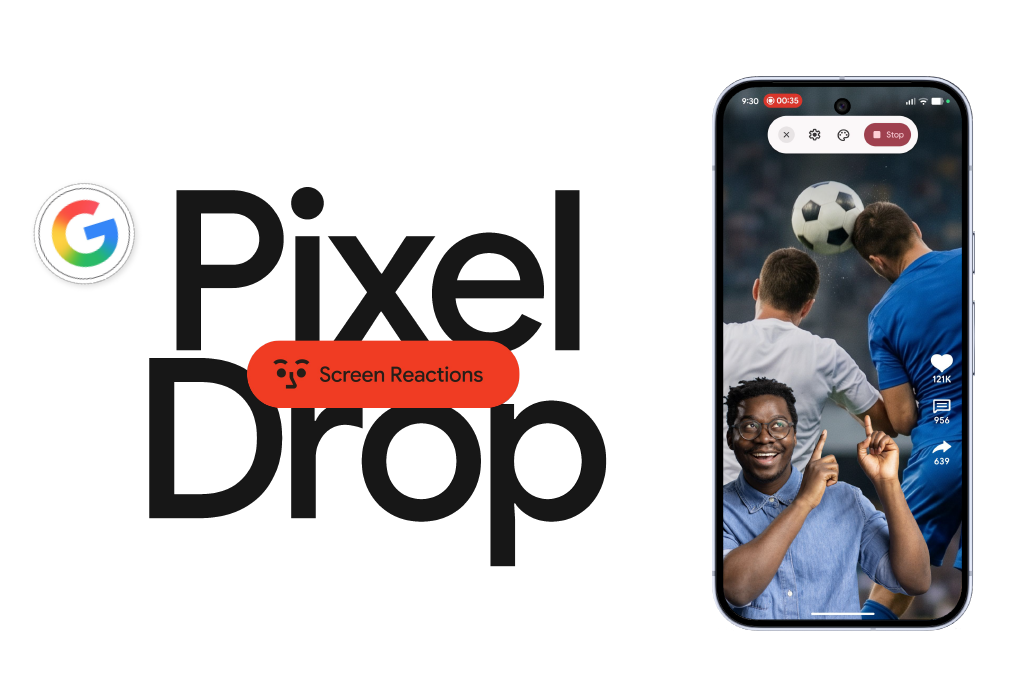
For creators, Google is introducing Screen Reactions to make one-take recordings simple:
"Record one-take reaction videos in a snap. Selfie videos are now built into screen recordings, so you can create your very own green screen without needing other apps. Tap, drag, and resize, then share on social."
And for those of us who need to manage our workspace on the go, multitasking is getting an overhaul with Bubbles:
"Jump from app to app without disrupting your flow. Easily turn apps like your browser, calendar, and Gemini into floating bubbles over your main screen. You can check them quickly, multitask, and get things done faster."
This kind of fluidity is why I love developing on the Android platform and using the Android platform. It is about offering choices on how you interact with your device.
Of course there's a slew of new AI features. Google is bringing Lyria 3 directly into Gemini to bring "custom soundtrack generation":
"Your custom soundtrack, created with Gemini. Just describe an idea or upload a photo, and it'll be transformed into a high-quality audio track with lyrics. It's designed for you to customize, so you can prompt Gemini with the style, vocals, and tempo you want. Then bop along and share."
And they are pairing it with Gemini Omni to democratize video editing:
"Gemini Omni makes creating and editing videos as easy as having a conversation. It's like Nano Banana for videos. Blend text, images, and video to bring your ideas to life."
These are highly complex models, yet they are running across devices dating back to the Pixel 6. This is the real magic of software optimization. It is about breathing new life into older hardware, allowing everyone to experience the latest innovations without being forced into a yearly upgrade cycle.
The real win in this release is that the foundation we all share is getting stronger, more open, and more capable. We do not need a restrictive club membership to enjoy these features. With Android 17 and Wear OS 7 arriving alongside these features, there's a lot to explore, but I get that all of these aren't for everyone.
I've updated my Pixel 10 Pro, so I'll be doing more digging to see what actually sticks in my day-to-day. My bet is on app bubbles and screen reactions.